 WAYS TO GIVE
Self breast exams is the first step in health agency
Self-breast exams are important first and foremost for understanding your normal. When you have a solid understanding of your baseline, it is easier to track differences and bring them to your provider’s attention.
25% of breast cancers are caught through self-examination
Breast exams are actually not about catching cancer. It’s about knowing your body. This can help you inform medical decisions later. Some officials do not recommend that the average woman do monthly self-exams. Some fear it leads to unnecessary medical anxiety and biopsies. Self exams are primarily for women who have average risk for breast cancer (you can calculate your risk on multiple websites). Women who do not have much of a risk should prefer their exam every 3-6 months instead. Often enough to know your body and convey it to a medical professional. Women of higher risk, including women over the age of 40, should start doing monthly breast exams. It is up to you to decide if a monthly exam is necessary or not.
Breasts are not simple. You have a lot of different tissues, ducts, fat, and muscle in your breast. Therefore, it’s actually fairly common to have lumpy breasts! In fact, 8 of 10 lumps are not cancerous! While you should probably get a professional breast exam if you do find any lumps, just know that it is not always cancer, so don’t worry! Cysts and fibroadenomas are fairly common, especially in younger women. Doing breast exams is important because it gets you used to your normal lumps and bumps so you can track when those change or new ones occur.
While most think breast exams are only tactile, they actually need multiple senses you have available. Breast exams look for lumps beneath the breast, but that is not the only symptom of breast cancer. You should perform at least one form of breast exam in the mirror so you can see what is occurring in your body. If your nipple expresses liquid, does it look and smell like lactation or something different? Your fingertips are important for breast exams, but so are your other senses.
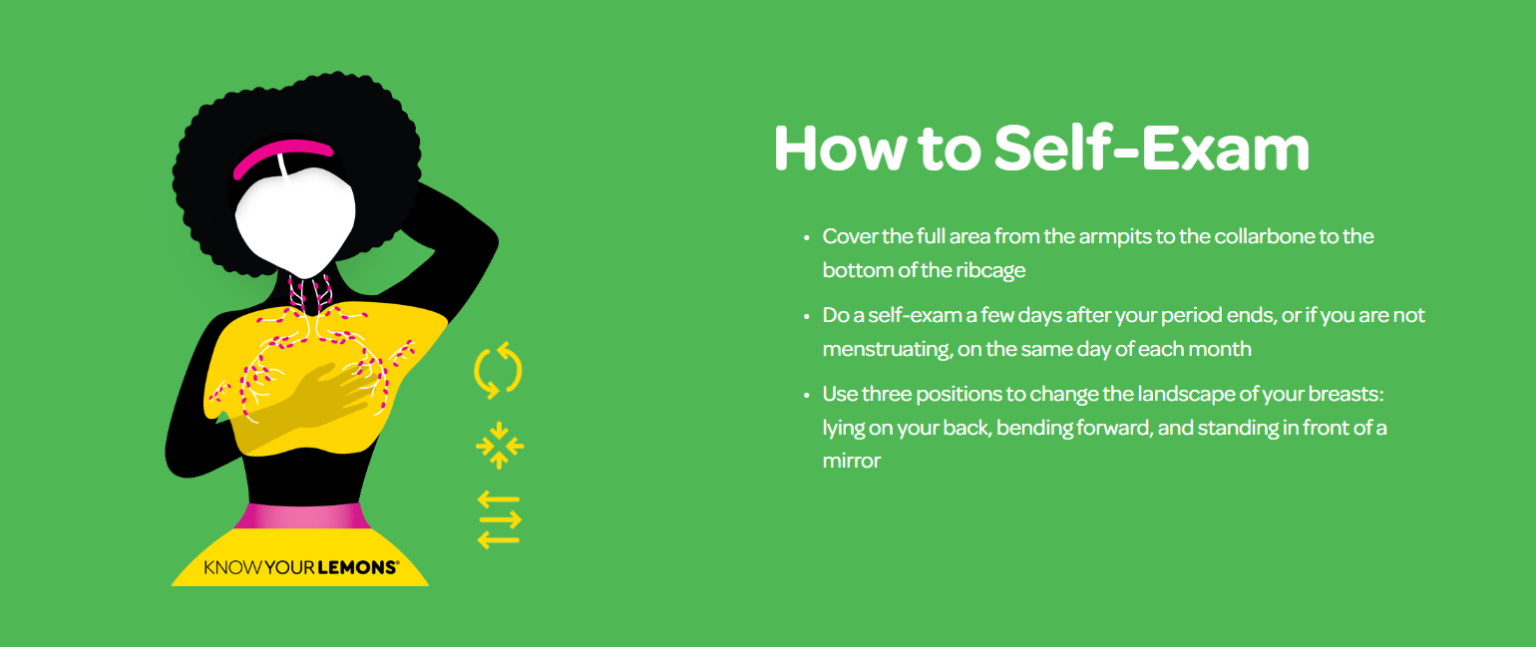
Timing can matter for breast exams. For individuals who menstruate, it is highly recommended that you do your self-exam a few days after your menstrual cycle. For some reason, that point is usually where the breast is least tender and lumpy. If you are an individual who doesn’t menstruate, officials recommend getting in the habit of performing one on the first of every month. Consistency is key to tracking your normal, natural breast progress!
Men aren’t often recommended to perform self-exams unless they have a family history or have had breast trouble in the past. It is also more important for older men, over the age of 50, to start paying attention to their chest, as most male breast cancer happens in older men. You perform a breast exam almost exactly like a woman would, tracing your tissue, lymph nodes, and nipples.

Know Your Lemons
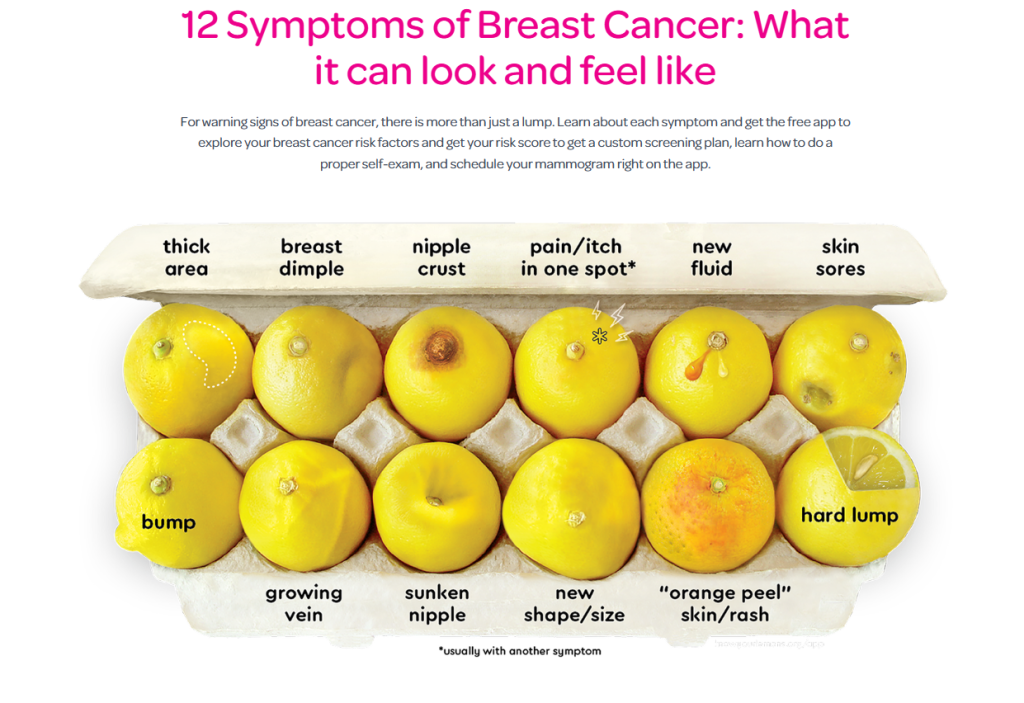
Know Your Lemons is an international organization dedicated to raising awareness for breast cancer. Their main focus is remind the world the 12 signs of cancer and how to detect breast cancer in your body. WBCI is a partner with KYL, we share their self exam booklets at community events. Below is some KYL resources for self breast exams. For more information, consider downloading the Know Your Lemons app for monthly reminders and tips for breast exams.
Other Breast Exam Resources